
Naturally gluten-free food
Fruit, vegetables, pulses, eggs, meat, fish, rice and maize can support a varied diet when preparation and cross-contact are considered.
This guide starts with diagnosis.
It covers cross-contact, follow-up and emerging therapies.
Every section links to 24 selected sources.
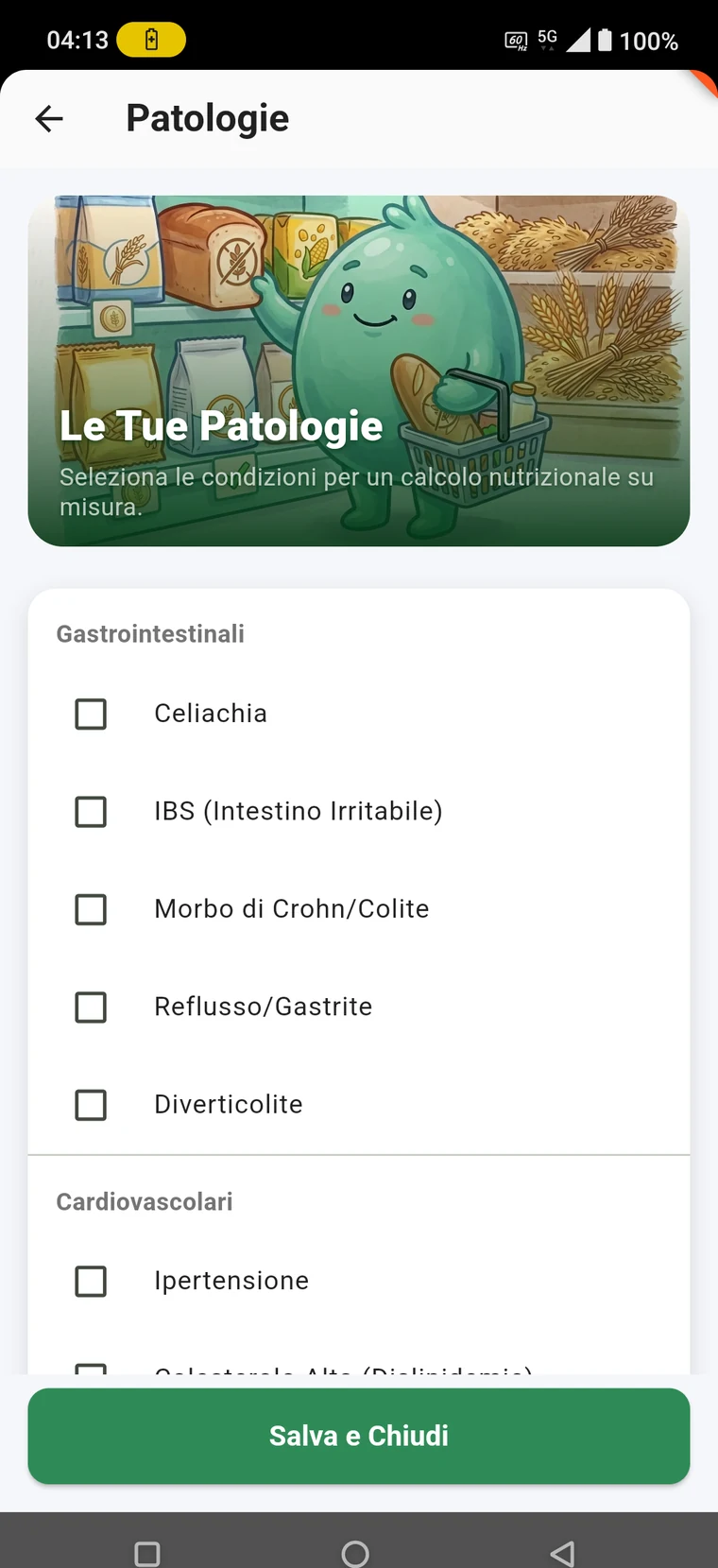
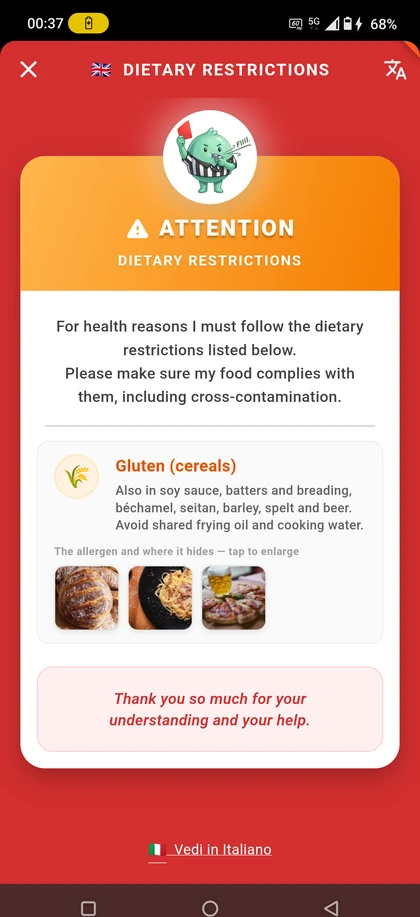
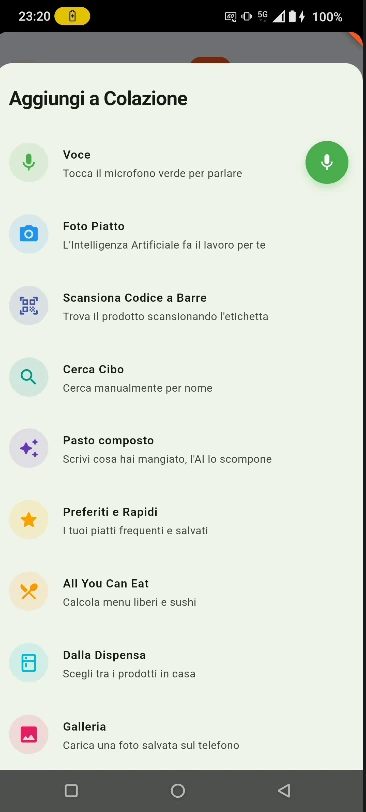
NUTRIMI adds warnings, a multilingual card and shared diary.

The condition is declared in the profile, the restriction can be communicated when eating out and meals can be logged through the most practical method. None of these screens certifies that food is gluten-free.
Celiac disease is a permanent autoimmune disease rather than an allergy or simple intolerance. In genetically susceptible people, gluten from wheat, barley and rye triggers an immune response that primarily damages the small-intestinal mucosa and can cause intestinal or extra-intestinal manifestations. A global meta-analysis estimated biopsy-confirmed prevalence at about 0.7%.
Reducing or eliminating gluten before clinical assessment can change serology and mucosal findings. Speak to a doctor before changing the diet when celiac disease is suspected.
Presentation can include diarrhoea, abdominal pain or bloating, iron-deficiency anaemia, fatigue, weight loss, reduced bone density, liver-test abnormalities, dermatitis herpetiformis and other manifestations. A lack of gastrointestinal symptoms does not exclude celiac disease.
A clinician reviews symptoms, family history and associated conditions.
Testing generally includes tissue-transglutaminase IgA and total IgA, with changes for IgA deficiency.
Adults commonly require duodenal biopsy; selected children may follow validated no-biopsy criteria.
Diet, symptoms, serology, nutritional status and recovery are reviewed over time.
The current standard is permanent gluten exclusion. In the European Union, a “gluten-free” statement requires no more than 20 mg/kg in food as sold. That legal threshold does not turn a photo, spoken recipe or menu into a measurement: hidden ingredients and cross-contact require labels, procedures and informed staff.
Fruit, vegetables, pulses, eggs, meat, fish, rice and maize can support a varied diet when preparation and cross-contact are considered.
Regulated statements and ingredient lists matter. “Wheat-free” does not automatically mean gluten-free.
An unbalanced gluten-free diet can be low in fibre or micronutrients and high in sugars, fat or salt.
Crumbs, airborne flour, shared toasters, utensils and porous surfaces can compromise otherwise suitable ingredients.
Feeling well does not prove that gluten exposure or mucosal injury is absent. Self-report, questionnaires, serology, gluten immunogenic peptides and histology have different strengths and limitations. Stool or urine GIP tests are emerging clinical tools; they are not a NUTRIMI feature and need clinical interpretation.
Reconstructs products, preparation, place and circumstances around a possible exposure.
They matter but cannot independently measure intestinal damage or identify gluten with certainty.
They form part of medical follow-up; persistent symptoms or abnormal results require systematic assessment.
Stool or urine peptides can document recent exposure within specific detection windows.
Investigational approaches include transglutaminase 2 inhibitors, gluten-degrading enzymes, sequestrants, tight-junction modulators and immune therapies. A proof-of-concept ZED1227 trial attenuated gluten-induced mucosal injury during a controlled challenge, but this does not permit routine gluten consumption and does not replace the diet. Some programmes remain early; others have failed to meet their targets.
Phase 1 and 2 candidates still need evidence of clinical benefit, safety and durable outcomes. The present standard remains a strict gluten-free diet with follow-up.
Add celiac disease to your profile. Receive ingredient warnings. Show the multilingual restaurant card. Log meals and symptoms. Share the diary with your nutrition professional.
The selected condition activates contextual food checks and warnings.
NUTRIMI flags gluten, wheat, barley, rye, spelt and declared gluten allergens in available data.
A multilingual card communicates celiac disease and cross-contact precautions.
Meals, products, notes and symptoms preserve context for follow-up.
A published professional plan reaches the app after connection and consent.
The public catalogue links every reference used by the software.
Read the label, ingredients and gluten-free declaration. Ask staff how they manage cross-contact. Use NUTRIMI warnings to support that check.
Each item opens the original document or PubMed record. The selection prioritises public authorities, scientific societies, systematic reviews and relevant clinical trials.
Official Italian data published in 2026.
Italian Ministry of Health 2 · Public healthPrevalence, manifestations and national documents.
Italian Ministry of Health 3 · Clinical overviewDefinition, diagnosis, treatment and complications.
Italian National Institute of Health 4 · Italian guidelineSIGE recommendations in the national guideline system.
ISS · SNLG 5 · GuidelineDiagnosis and management across age groups.
PMID 36602836 6 · Updated guidelineEuropean adult diagnostic approach.
PMID 40999951 7 · PaediatricsPaediatric diagnosis and selected no-biopsy criteria.
PMID 31568151 8 · RegulationConditions for gluten-free and very-low-gluten statements.
EUR-Lex 9 · Epidemiology96 studies; seroprevalence and biopsy-confirmed prevalence.
PMID 29551598 10 · State of the artPathophysiology, diagnosis and emerging treatment.
BMJ 2025 11 · NutritionDeficiencies and certainty of evidence during gluten-free diets.
PMC12296119 12 · AdherenceSystematic review and meta-analysis against laboratory tests.
PMID 39125309 13 · MonitoringMulticentre comparison with serology and questionnaires.
PMID 27644734 14 · MonitoringDiet transgressions and incomplete mucosal healing.
PMID 26608460 15 · Follow-upRepeated exposure and persistent villous atrophy.
PMID 36890679 16 · 2025 researchProspective work on sampling frequency.
PMID 40516107 17 · Digital healthDiet adherence and quality of life with app support.
PMID 32071731 18 · Digital healthEvaluation of gastrointestinal symptoms.
PMID 35846977 19 · Digital platformDigital dietary assessment in adults and children.
PMID 35161479 20 · Remote supportSustained improvements in knowledge and adherence.
PMID 34917316 21 · Digital interventionEducation, patient activation and quality of life.
PMID 28343658 22 · Experimental therapyTransglutaminase 2 inhibition during gluten challenge.
PMID 34192430 23 · Therapeutic research2024 review of pharmacological and immune strategies.
PMID 39493330 24 · Clinical pipelineUpdated review of advanced clinical approaches.
PMC11970589No. It is a permanent autoimmune disease. Wheat allergy and non-celiac gluten sensitivity are distinct conditions.
Not independently: doing so can make diagnostic tests negative or difficult to interpret. Speak to a clinician first.
EU-regulated use allows no more than 20 mg/kg in food as sold. Practical safety also depends on preparation and cross-contact.
No. A standard nutrition app cannot measure gluten concentration or inspect a kitchen. It can support ingredient review, warnings, diaries and communication while declaring these limits.
No. Current research has not replaced the gluten-free diet in routine clinical care.